Ця історія ще не доступна українською
Показуємо оригінал Ukrainian. Переклад готується.
Success Story: U-Bridge Global –Winner of the Excellence in Innovation & Independent Thinking Award
More on the topic

Visionest Institute continues the Success Story series, celebrating the journeys of our alumni and the achievements they accomplished throughout the Export Consultant Mastery Programme 2025-2026. In this edition, we highlight the journey of U-Bridge Global.
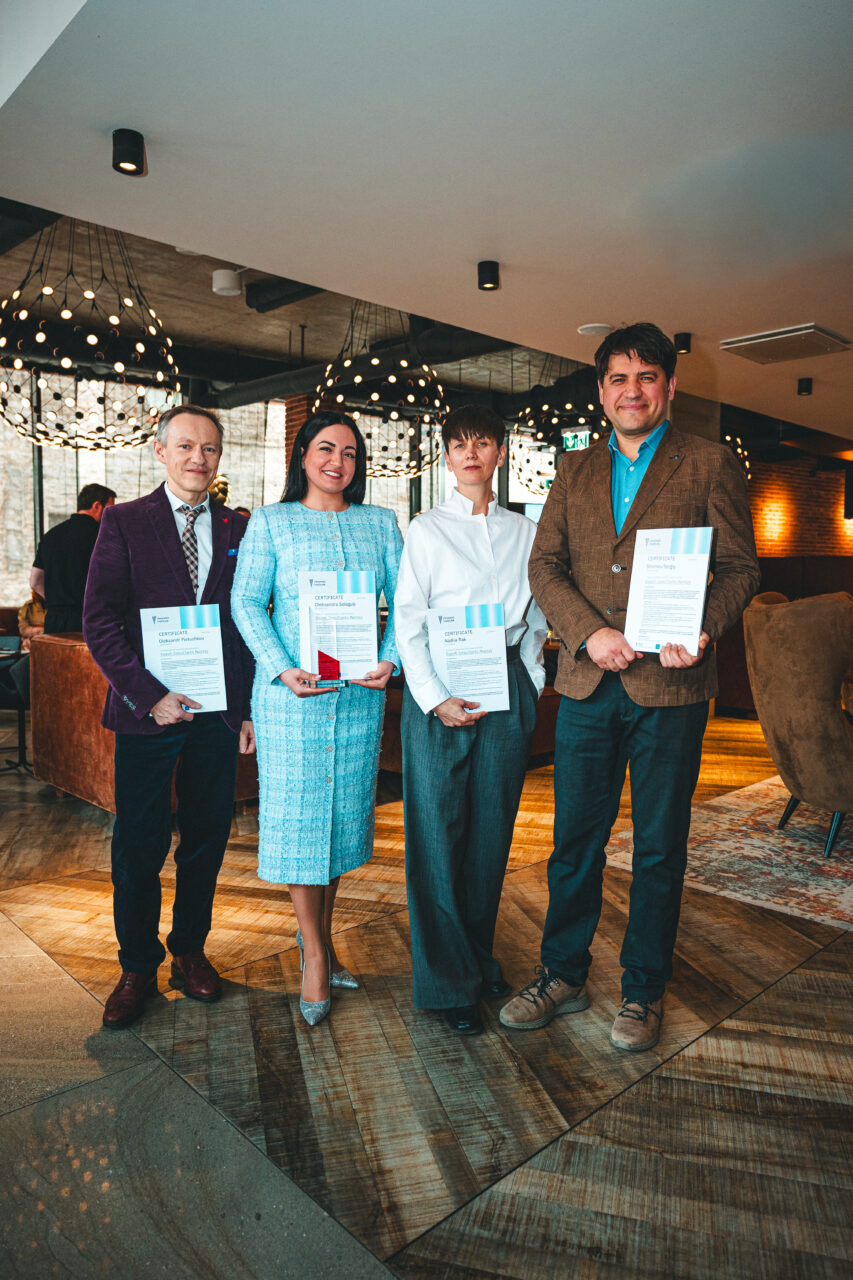
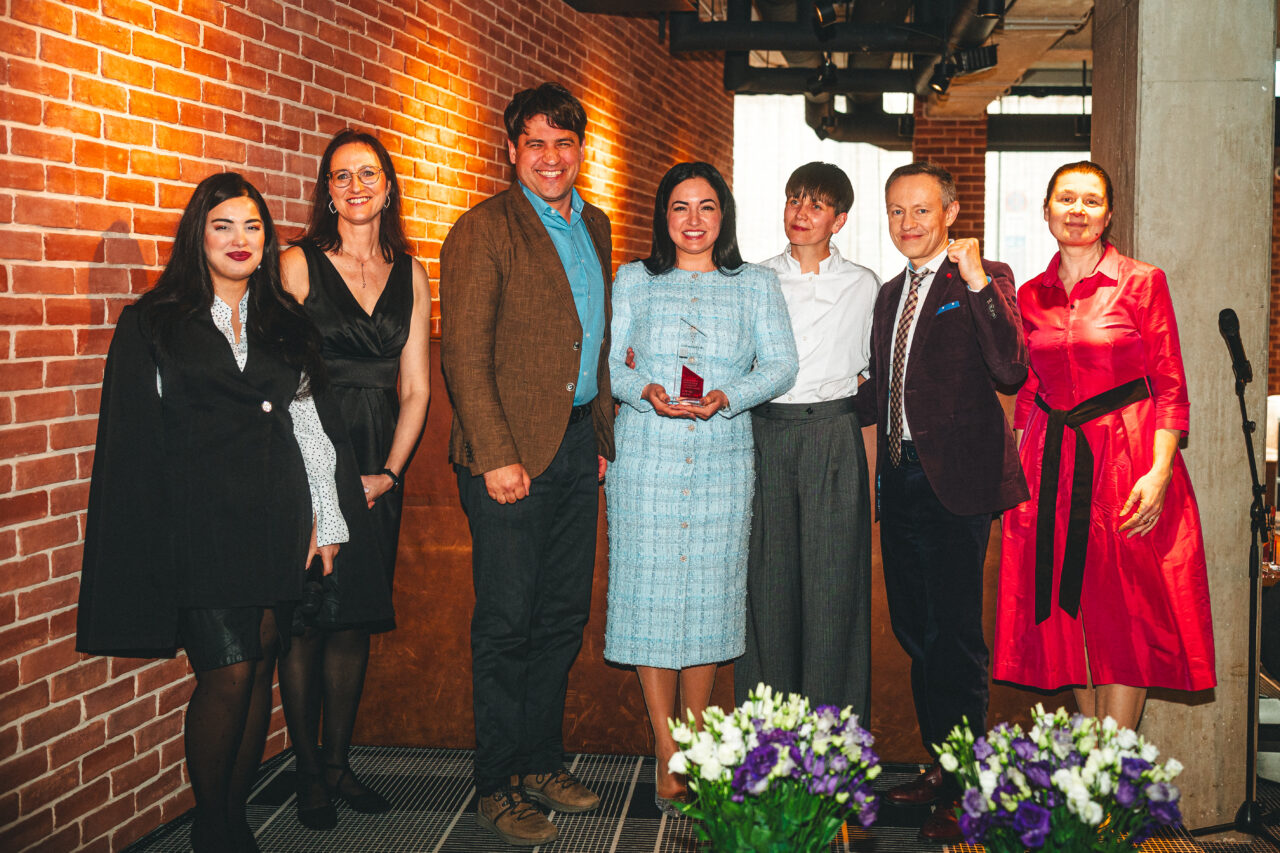
Bringing together Alona Voznenko, Nadiia Rak, Oleksandr Pietushkov, Oleksandra Sologub, and Sergiy Smirnov, U-Bridge Global brought together diverse professional experience in export, business development, project management, and international cooperation. Throughout the programme, the team combined practical expertise with curiosity, collaboration, and a fresh perspective to approach real business challenges. Their innovative ideas and ability to think independently were recognized with the Excellence in Innovation & Independent Thinking Award presented at the graduation ceremony in Tallinn.
Q: Could you briefly introduce yourselves, share your professional backgrounds, and tell us what inspired you to join this nine-month program?
Alona Voznenko:
“I have been working in export consulting and digital marketing for about ten years, helping Ukrainian companies, especially textile and furniture brands, sell through e-commerce platforms such as eBay and Zalando. Before that, I was CEO of ADAM.UA, led the EBA Dnipro PR & Marketing Hub, and worked as a speaker and trainer in USAID-, UNDP-, Google Ukraine-, and Nova Poshta Business School programmes. I joined this nine-month program because I wanted to refresh my export consulting toolkit, meet strong professionals, and test modern digital approaches in real client cases.”
Nadiia Rak:
“My background is in SME development, innovation, and donor-supported projects. I have worked on EU-funded and international initiatives that brought together businesses, public institutions, and international partners to support innovation, digital transformation, and sustainable development. I joined the programme because I wanted to translate this experience into a sharper consulting practice: more structured, more practical, and closer to the real business decisions that small and medium-sized enterprises face every day.”
Oleksandr Pietushkov:
“I have around twenty years of experience in project management and export certification within EU-funded programmes. My work has often been about bringing structure to complex processes: standards, documentation, compliance, and practical implementation. I joined this nine-month program because I wanted to broaden my horizons as an export consultant, work with a strong international learning environment, and build a bridge between Ukrainian manufacturers and global markets in a very concrete, hands-on way.”

Oleksandra Sologub:
“I have 15 years of experience leading international projects, building cross-border partnerships, and helping organizations scale, structure processes, and deliver measurable results. My background combines operations management, export development, and international negotiations, with hands-on experience in complex multi-stakeholder environments. Honestly, I was also very curious to see how our Ukrainian team would work together in such an intensive format. ”
Sergiy Smirnov:
“My professional background is in FMCG export. Over seventeen years I have built export systems from scratch and established deliveries to twenty-seven countries, including the EU, USA, Canada, the Middle East, and Asia. I also worked with dietary and kosher product lines for global markets. I joined this nine-month program to systematize my practical experience, strengthen the consulting side of my work, and understand how modern tools, digitalisation, and structured methodology can improve export development for Ukrainian producers. ”
Q: What was your main motivation for participating in the programme, and what expectations did you have at the beginning of the journey?
Nadiia Rak:
“My main motivation was to improve my consulting skills and learn a more structured way of working with businesses. My background is in SME development projects, but I wanted to better understand how to turn this experience into practical advice and support for companies. I was hoping to get useful tools, frameworks, and real examples that I could apply in my work. At the beginning, I expected to learn how consultants approach business challenges and communicate recommendations to clients. The programme met these expectations and gave me practical methods that I can use in real projects. ”
Oleksandr Pietushkov:
“For me the motivation was simple: I wanted to move from experience to mastery. I had worked with projects, certification, and EU standards for years, but I wanted to see the full export-consulting picture: market analysis, digital tools, logistics, sales, negotiations, and client communication. I expected a lot of learning, but I did not fully expect the intensity. It was not just “listen and write notes”; it was learn, practice, rethink, rewrite, present, and do it again. That rhythm kept me going. ”

Alona Voznenko:
“I came into the program with a very practical motivation: to strengthen my consulting work with Ukrainian brands entering international e-commerce markets. I expected useful frameworks, but also living examples and professional exchange. From the first weeks, I felt lucky with the team, because everyone brought a different angle and real experience. I also expected to discover new tools, and that definitely happened: from Agile and digital service design to Lovable.app, Manus.im, brand archetypes, and storytelling frameworks. ”
Q: The programme was highly intensive and brought together experts, mentors, and professionals from different sectors. How would you describe your overall experience, and what were the most valuable lessons or skills you gained?
Oleksandra Sologub:
“I would describe the experience as intense, very practical, and surprisingly personal. Every month I felt that I was growing: sometimes through new knowledge, sometimes through pressure, and sometimes through teamwork. The most valuable part was that we did not stay in theory. We worked with real companies, real challenges, and real deadlines. The study trip to Estonia also gave a special feeling: visiting companies, meeting people, and then continuing online created a strong connection with the whole journey. ”
Sergiy Smirnov:
“For me, the value was in the system. Each module opened a new layer: market analysis, e-commerce, entry models, logistics, product adaptation, storytelling, and sales. I have a strong export background, but the program helped me connect my practical experience with structured consulting tools. I also underestimated the importance of digital and automation tools before. Now I see that they can strongly influence market entry, support decision-making, and in some cases even determine whether a company succeeds. ”
Alona Voznenko:
“The experience was very rich because it combined different worlds: export, marketing, digital tools, teamwork, and consulting sales. What I gained most was the ability to look at familiar things differently. For example, I had always thought Agile was mostly for IT, but the early Agile lecture completely changed that view. Later, the modules on brand positioning, e-commerce tools, and storytelling helped me connect my digital marketing experience with a wider export-consulting mindset. ”
Q: What was the most challenging part of the journey for your team, and how did you overcome it?
Oleksandr Pietushkov:
“One of the hardest periods for me personally was Module 3, because it coincided with intense shelling in Kyiv, blackouts, and cold days. At the same time, the program unexpectedly became a source of focus and stability. The team rhythm, mentor sessions, client meetings, and preparation gave me a constructive line to hold on to. We overcame the pressure by staying organized, supporting each other, and continuing step by step. Sometimes progress itself becomes a form of resilience. ”

Nadiia Rak:
“For the team, the challenge was often not a lack of effort, but the need to structure complexity. Some modules gave us huge volumes of information, client input, mentor comments, and assignment requirements at the same time. We overcame it by dividing work clearly, comparing interpretations, and turning uncertainty into shared logic. Module 7 was a good example: there was no ready-made map, so we had to build our own structure and decide what was really relevant for the client. ”
Oleksandra Sologub:
“The most challenging part was probably when tasks looked clear at first, but then became much more complex once we started doing them. It happened with presentations, with client cases, and especially in the final modules. Sometimes we had to change our approach quite quickly. But as a team we learned to talk openly, divide tasks, and support each other. Even when the module felt unclear or too dense, I knew I could rely on the team, and this made the process manageable. ”
Q: Your team was formed within the framework of the programme. How was the experience of working together, facing challenges as a team, and building collaboration throughout the process?
Alona Voznenko:
“From the beginning, I felt genuinely lucky with our team. Working together was easy and inspiring from the first weeks – everyone was open, helpful, and ready to bring ideas to the table. It really felt as if we had known each other much longer than just a few online meetings. Of course, there were intense deadlines and difficult modules, but our collaboration stayed warm and practical. I think this was one of the biggest strengths of U-Bridge Global. ”
Sergiy Smirnov:
“I was impressed by the diversity and professionalism of the team from the start. We had people with experience in FMCG export, economic development, digital marketing, operations, certification, and international negotiations. This gave us a strong internal network and allowed us to look at each case from several angles. The psychological test was also useful because it helped clarify roles and working styles. Our collaboration worked because it was not only friendly, but also disciplined and result-oriented.”

Oleksandr Pietushkov:
“In the first weeks I was very focused on organizing our schedule and rhythm: how we meet, how we divide tasks, how we communicate. Gradually we learned each other’s styles and started moving faster. What I liked most was that our team had real energy – sometimes serious, sometimes creative, sometimes tired, but always moving. We could argue, rewrite, rehearse, and still stay constructive. For me, teamwork was not a side part of the program; it was one of the main lessons. ”
Q: During the graduation ceremony, your team received a special award recognizing your achievements. What does this recognition mean to you, and what do you think contributed most to your success?
Oleksandra Sologub:
“The award felt very emotional for me, because it recognized not only the final result but the whole journey behind it. We started as people who met only during the intro meeting, and by graduation we had become a real team. I think our success came from fast coordination, trust, and the ability to solve problems without drama. Everyone contributed from their own strength, and this helped us move forward even when tasks were difficult or the deadlines were tight. ”
Nadiia Rak:
“For me, the special award was a confirmation that complementary skills can become real team value when they are properly organized. We were not identical experts, and this was exactly our advantage. We combined analytical thinking, export practice, digital marketing, logistics, client communication, and programme-management discipline. The award also reflected client results: our work was not abstract; it helped companies see new options, clarify strategy, and make decisions with more confidence. ”
Sergiy Smirnov:
“This recognition means a lot because it was earned through consistent work, not one single presentation. We worked with different sectors, different clients, and very different assignments. I believe our success came from professional diversity, strong internal responsibility, and the ability to turn analysis into practical recommendations. In the AJOUR case, for example, we challenged the initial representative-channel idea and showed why an online-store model could be more realistic. These moments demonstrated that we could add real consulting value. ”
Q: Throughout the programme, you had the opportunity to learn and collaborate with professionals from different countries and cultural backgrounds. How would you describe this experience, and what role did networking play in your journey?

Alona Voznenko:
“The international environment was one of the most inspiring parts of the program. Learning alongside professionals from Georgia, Estonia, and Ukraine created a feeling that export is not only about markets, but also about people and trust. The Estonia study trip made this especially visible: company visits, informal talks, and the Visionest celebration helped us connect beyond assignments. Networking was not “collecting contacts”; it was exchanging perspectives and seeing how differently people approach the same business questions. ”
Oleksandra Sologub:
“For me, the international part was very warm and motivating. I enjoyed meeting people from different backgrounds, hearing their examples, and seeing how teams from other countries solved similar tasks. It made the program feel much bigger than our own assignments. I am also genuinely looking forward to meeting everyone again in Tallinn, because these connections became part of the experience. Networking here was not formal – it was human, supportive, and very real. ”
Oleksandr Pietushkov:
“Networking during the program felt like building bridges in real time. We met mentors, organizers, Estonian companies, and colleagues from Georgia, Estonia, and Ukraine. Some conversations gave ideas immediately; others stayed in the head and came back later, like after Artem’s sessions – a waterfall of information that you digest slowly. This international circle gave the program warmth and momentum. It reminded me that export consulting is not only data and strategy; it is also confidence between people. ”
Q: Now that you have completed the programme, what are your next steps as a team, and how do you plan to apply the knowledge and experience gained throughout the programme in practice?
Oleksandr Pietushkov:
“As a team, the next logical step is to turn our accumulated tools into a clear consulting service. During the program we built checklists, templates, workflows, market-analysis approaches, and client-delivery logic. I see strong potential in packaging this into practical advisory support for Ukrainian SMEs: not overwhelming reports, but structured guidance, priorities, and implementation steps. For me personally, I will also apply these tools in donor-backed acceleration programmes, where businesses need both strategy and realistic next actions. ”
Sergiy Smirnov:
“I see our next step in continuing to work with exporters in a very practical way. The program showed that small and medium producers often need help not with abstract strategy, but with concrete decisions: which market, which channel, which logistics model, which cost structure, and which partner. I will definitely apply the logistics, Incoterms, value-chain, and digital tools in my own work. As a team, we can help Ukrainian manufacturers move from export ambition to practical implementation by combining real export experience with structured consulting methodologies. ”
Alona Voznenko:
“For me, the next step is to keep developing our digital and market-entry services. I would like to apply what we learned in e-commerce, landing-page testing, personas, brand archetypes, and marketplace strategy. The Komilfo Sweden case showed how powerful it is to combine buyer personas, sustainability positioning, compliance checklists, and a practical toolbox. I think U-Bridge Global can support Ukrainian companies by making international expansion less chaotic and more testable. ”

Q: How has the programme influenced your perspective on export development, and how do you see your role in strengthening export opportunities for your country and within European markets in the future?
Sergiy Smirnov:
“The program reinforced that export development is not only about finding a buyer abroad. It is a system: product readiness, logistics, certification, pricing, communication, trust, and long-term partner management. For Ukraine, this is especially important because many producers have strong products but need support turning them into sustainable export offers. I see my role in helping companies build reliable export systems, avoid unrealistic promises, and understand the unit economics and operational logic behind every market decision. ”
Oleksandr Pietushkov:
“My perspective became broader. I used to see many export challenges through compliance, standards, and project execution. Now I see how this connects with storytelling, digital tools, insight selling, and negotiations. For Ukrainian manufacturers, reaching global markets is not only a technical process; it is about creating confidence. My role is to help them lower risks, build realistic steps, and create their own future, not just wait for opportunities. Stories and thorough planning -this is still my formula. ”
Oleksandra Sologub:
“The program helped me see export development as a combination of strategy, operations, and communication. Now I understand better how much depends on readiness: product, team, market logic, and the ability to explain value clearly. I see my role in helping Ukrainian businesses become more structured and confident when approaching foreign partners, including European markets and beyond. ”
Q: Looking back at the past nine months, how has this experience changed you personally and professionally?
Oleksandr Pietushkov:
“Professionally, Module 7 was a real turning point for me – a complete whirlwind. I realized that the old “solution selling” logic is no longer enough, because B2B clients often complete much of their journey before speaking to a supplier. Insight Selling changed my thinking: target Mobilizers, use opportunity insights, map BATNA before negotiations, and use an MOU to make the client feel truly heard. Personally, the program kept me alert, resilient, and moving forward during a difficult year. ”
Sergiy Smirnov:
“One of the biggest personal changes was the shift from thinking primarily as an exporter to thinking as a consultant. The program helped me structure knowledge that had previously been based mostly on practical experience. ”
Alona Voznenko:
“The program changed the way I filter knowledge. Earlier modules were very practical and immediately applicable, while Module 7 was more conceptual and ambiguous. At first this was frustrating, but later I saw it as a test of professional maturity. Not every framework can be copied directly into practice. Sometimes you need to evaluate, adapt, and build your own system. This is a very useful shift for me as a consultant and marketer working with real companies in changing markets. ”
Nadiia Rak:
“The biggest personal change is that I became more comfortable structuring uncertainty. In my work I am used to designing programmes and processes, but the program pushed me closer to the consulting moment when the answer is not yet clear and the client still needs direction. I also became more careful about AI: it can accelerate research and reveal patterns, but it should not replace thoughtful analysis. This balance between speed and responsibility became one of my strongest professional takeaways. ”
Q: Would you recommend this programme to other professionals interested in developing their expertise in export and international business? What advice would you give to future participants before starting such an intensive journey?
Oleksandra Sologub:
“Yes, I would definitely recommend it, but I would also warn future participants: be ready for intensity. This is not a program where you only attend lectures. You will read, discuss, prepare presentations, work with clients, receive feedback, and sometimes feel that there is too much at once. My advice is simple: rely on your team, ask questions, and do not be afraid when something is unclear. Clarity often comes through work, not before it. ”
Sergiy Smirnov:
“I would recommend the program to professionals who are ready to work seriously and not just collect certificates. My advice is to treat every module as a practical laboratory. Even if the client or topic is outside your field, try to understand the logic and extract tools you can reuse later. Also, listen to other teams. Their examples broaden your understanding of different industries and markets. The value of the program is not only in mentors, but in the whole professional environment. ”
Alona Voznenko:
“I would recommend it especially to people who already have experience and want to refresh their thinking. My advice: come with curiosity and flexibility. Some topics will confirm what you know, others will challenge your assumptions. Do not expect every tool to fit your work perfectly. Take what is useful, test it, and adapt it. Also, enjoy the team part – it may become one of the most valuable elements of the entire nine-month journey. ”

Q: Finally, if you had to describe this entire journey in one word or one sentence, what would it be?
Alona Voznenko:
“A practical journey of discovery – with the right team, even intensive learning feels inspiring. ”
Nadiia Rak:
“The real value of this journey was the people I met and learned from. ”
Oleksandr Pietushkov:
“A whirlwind that turned into focus, resilience, and a new professional direction. ”
Oleksandra Sologub:
“Growth – every month, step by step, with people I am truly grateful for. ”
Sergiy Smirnov:
“A demanding but valuable path from export experience to structured consulting competence. ”

The journey of U-Bridge Global reflects what the Export Consultants Mastery Programme 2025-2026 set out to achieve – bringing together professionals with diverse backgrounds, encouraging collaboration across disciplines, and turning knowledge into practical solutions for businesses.
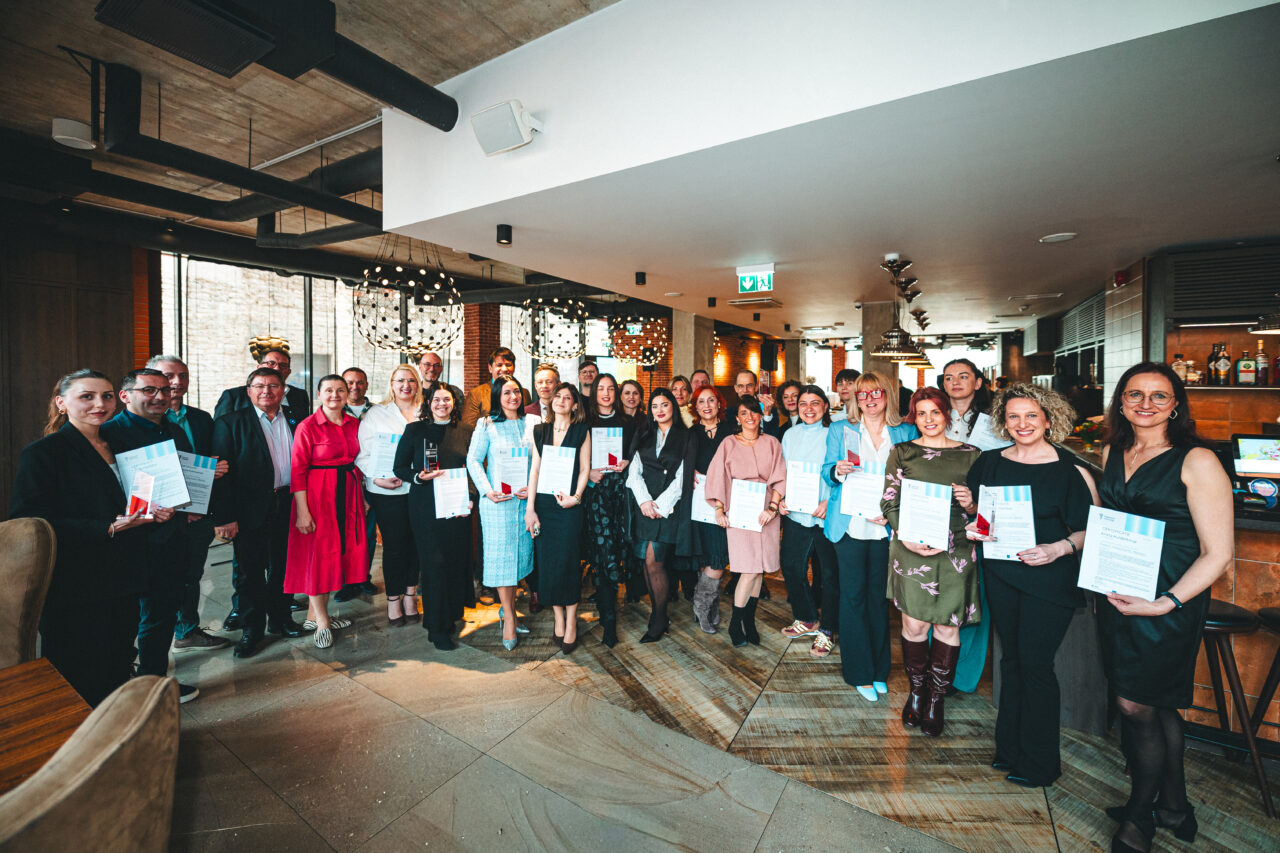
As part of a fully funded nine-month international learning experience supported by the Estonian Centre for International Development (ESTDEV), the programme brought together 32 professionals from Georgia, Ukraine, and Estonia, creating a unique environment for cross-border collaboration, applied consulting practice, and professional growth.
Throughout the programme, U-Bridge Global worked with real businesses from different industries, developing tailored export strategies and addressing practical challenges related to international market expansion. By combining expertise in export development, project management, digital marketing, operations, and international cooperation, the team demonstrated how fresh ideas, independent thinking, and collaborative problem-solving can create meaningful value for companies looking to grow internationally.
Their innovative approach, collaborative spirit, and ability to explore new perspectives in solving complex business challenges were recognised with the Excellence in Innovation & Independent Thinking Award presented at the graduation ceremony in Tallinn.
Through the Success Story series, Visionest Institute continues to celebrate the people behind the programme – professionals who challenged themselves, learned from one another, built lasting connections, and strengthened their ability to support international business development.
While the programme has come to an end, the journey continues through new partnerships, future projects, and the professional communities built along the way.
Stay tuned as we continue sharing the stories of this inspiring international cohort.