
Estonian exports are growing again. The question is, who in your company will make this growth happen?
The Grow Global program helps connect companies' export and growth needs with highly experienced 55+ specialists.

A growth opportunity is opening up again for Estonian companies. The export of goods and services is moving upwards, the economy has turned to growth, and space has opened up for Estonian companies in several foreign markets.
A growth opportunity is once again opening up for Estonian companies. The export of goods and services is trending upwards, the economy has turned to growth, and more room has become available for Estonian companies in several foreign markets.
Visionest Institute: Estonian export experience applied in four countries
Grow Global Estonia is not created out of thin air. In recent years, Visionest Institute has been developing the export capabilities of companies in Estonia, Ukraine, Georgia, and Armenia, combining practical export training, personal mentoring, target market analysis, and the creation of the company's own real export plan.
In Georgia, Visionest Institute, together with ESTDEV and the UN Development Programme (UNDP), has supported the growth of competitiveness and export readiness of 306 small and medium-sized enterprises since 2023. The companies participating in the programme have created 960 new jobs, 25 companies have entered the European Union market for the first time, and participants have reported an average 5% growth in export revenue.
In Ukraine, 45 teams and over 120 participants from all over the country participated in the six-month Born Global Ukraine entrepreneurship and export accelerator. In the programme, business plans for international markets were developed and skills in export strategy, international sales, and communication were developed. Visionest has also implemented development programmes for export consultants and export specialists in Ukraine, and Grow Global Ukraine, launched in 2026, will take the same practical model to the next level, connecting Ukrainian companies with specialists prepared for international sales.
In Armenia, Visionest, together with ESTDEV and local partners, has built up successive export training and accelerator programmes. Companies work through target market selection, pricing, logistics, regulations, marketing, and finding partners, and ultimately create an implementable export business plan. 40 Armenian companies were selected for the 2026 export accelerator, and the programme also uses digital and AI-based export tools and international mentoring.
In Estonia, Grow Global brings this international experience back to serve the growth of Estonian companies. The model combines two needs: a company with the potential to grow in a foreign market, and an experienced specialist who can take responsibility for developing a specific export market. During the programme, the company and the specialist can use the experience of Visionest's international experts, trainers, and mentors.
The central principle of Visionest Institute's international programmes has always been the same: the result of export training should not be a certificate on the wall, but a genuinely usable market entry plan for the company, new contacts, and real steps in a foreign market.
At the same time, one of the most practical problems of export has not disappeared: a company may know where it wants to go, but often there is no one on the team whose daily job would be to actually get that market up and running.
Just a few years ago, we talked about Estonian exports mainly through crises. The energy price shock, rapidly increased labour costs, the weakness of Scandinavian markets and geopolitical changes hit Estonian exporters hard.
According to the OECD's latest economic survey of Estonia, Estonia's export market share by volume fell by about 15% between 2022 and 2024, which was one of the largest drops in Europe. The prices of Estonian export goods increased by as much as 34% between 2019 and 2024, and companies' cost-based competitiveness took a strong hit.
This is a background that should not be embellished. But the picture in 2026 is already different.

To grow in European markets, it is not enough to mark destination countries on a map – success is born from conscious market selection, local understanding, and consistent sales work. Photo: Fer Troulik / Unsplash
Exports are growing again
According to the latest data from Statistics Estonia, the Estonian economy grew by 1.8% year-on-year in the second quarter of 2026. This was the fifth consecutive quarter of growth, and the largest positive contribution came from manufacturing.
The export of goods is also on an upward trend. In June 2026, goods worth nearly 1.7 billion euros were exported from Estonia – 15% more than a year earlier. The export of goods for the entire first half of the year grew by 8%.
The main export articles included electrical equipment, agricultural products and foodstuffs, and Estonia's most important export partners included Finland, Latvia, Lithuania and Sweden.
In the export of services, Estonia's position is even more interesting. In the first quarter of 2026, services worth nearly 3.3 billion euros were exported, 4% more than a year ago. The surplus in the foreign trade of services reached 765 million euros. The largest share was made up of other business services, telecommunication, computer and information services, and transport services.
Estonia's export of services to European Union countries grew by 7% year-on-year.
The Bank of Estonia has also noted that the range of target markets for Estonian exporters has expanded. In the fourth quarter of 2025, exports grew particularly towards Central Europe, including Poland and Germany. This is an important change for Estonia, whose exports have historically been strongly linked to nearby markets and the Nordic economic cycle.
So the opportunity is there. But an opportunity does not yet make a sale.
The export problem for Estonian companies is not always the product. Often, the problem is people and time.
Many Estonian companies have a competitive product or service. They even know quite precisely which market they would like to enter.
Then the real work begins.
Who maps potential customers? Who finds resellers and partners? Who follows up with contacts after a trade fair?
Who adapts the value proposition for the German, Swedish, or Polish buyer? Who keeps the CRM in order, builds the sales pipeline, arranges meetings and does all this not for two weeks, but consistently for months on end?
Too often the answer is: the CEO, the owner, or the sales manager – when there is time left over from other work.
This is where a gap opens up between the export plan and export turnover.
Grow Global Estonia is based on a very simple idea: your next export market must have an owner.
The company chooses an export development specialist or an international salesperson. Visionest Institute trains and mentors them during a five-month program, but the learning is not based on abstract case studies. The specialist works with the company's own target market, customers, partners, value proposition, and sales pipeline.
The program's training and mentoring are free of charge for the company, with support from the European Social Fund+ financing. The company's obligation, on the other hand, is real: to choose a suitable person, agree on a form of employment or cooperation with them, and give them the opportunity to take real responsibility for developing the company's exports.
This is not a free employee program. It is an opportunity to significantly reduce the risk of building new export capacity.

The strength of an experienced specialist is that the knowledge, contacts, and self-confidence are already there – all that is needed is the right opportunity to put them to work for export growth. Photo: Kamil Kalkan /Unsplash
Why 55+?
It is worth pausing here for a moment, because the age of 55+ may at first glance seem like a program limitation to some employers.
In export sales, this may in fact be one of the program's strengths.
Opening a new market does not just mean searching for LinkedIn contacts and sending sales emails. Good international B2B sales require the ability to communicate with managers, listen, negotiate, understand different business cultures, tolerate negative responses, build trust, and consistently move forward in deals with long sales cycles.
These are skills that are not acquired in a training room alone.
Grow Global candidates have a high entry barrier: they must be at least 55 years old, have a higher education, be proficient in English at least at the C1 level, and have at least two years of international work, study, or living experience. Many candidates also have long management, sales, entrepreneurial, or professional experience.
Grow Global brings to companies specialists aged 55+ who have a higher education, very good English skills, and at least two years of international work, study, or living experience.
International research also does not support the assumption that long work experience is a problem for an employer.
The OECD highlights experience and reliability, among other things, as strengths of older workers and notes that in jobs that particularly value experience, people can remain highly productive for much longer. According to the OECD, older workers often bring more work experience, management experience, and stability to a company, and the productivity of workers aged 50+ can be comparable to that of workers aged 35–49. The OECD considers the combination of knowledge and skills of different age groups in one team to be particularly valuable.
The better inclusion of older workers is also important for the competitiveness of economies with an ageing workforce, according to the OECD.
Grow Global adds a modern toolkit to this experience: international B2B sales, target market analysis, digital sales tools, AI, storytelling to foster sales and relationships, logistics, contracts, negotiations, and sales pipeline management – plus a personal export mentor.
The result should not be a "55+ employee". The result should be an experienced international sales professional whose previous experience is combined with today's export tools.
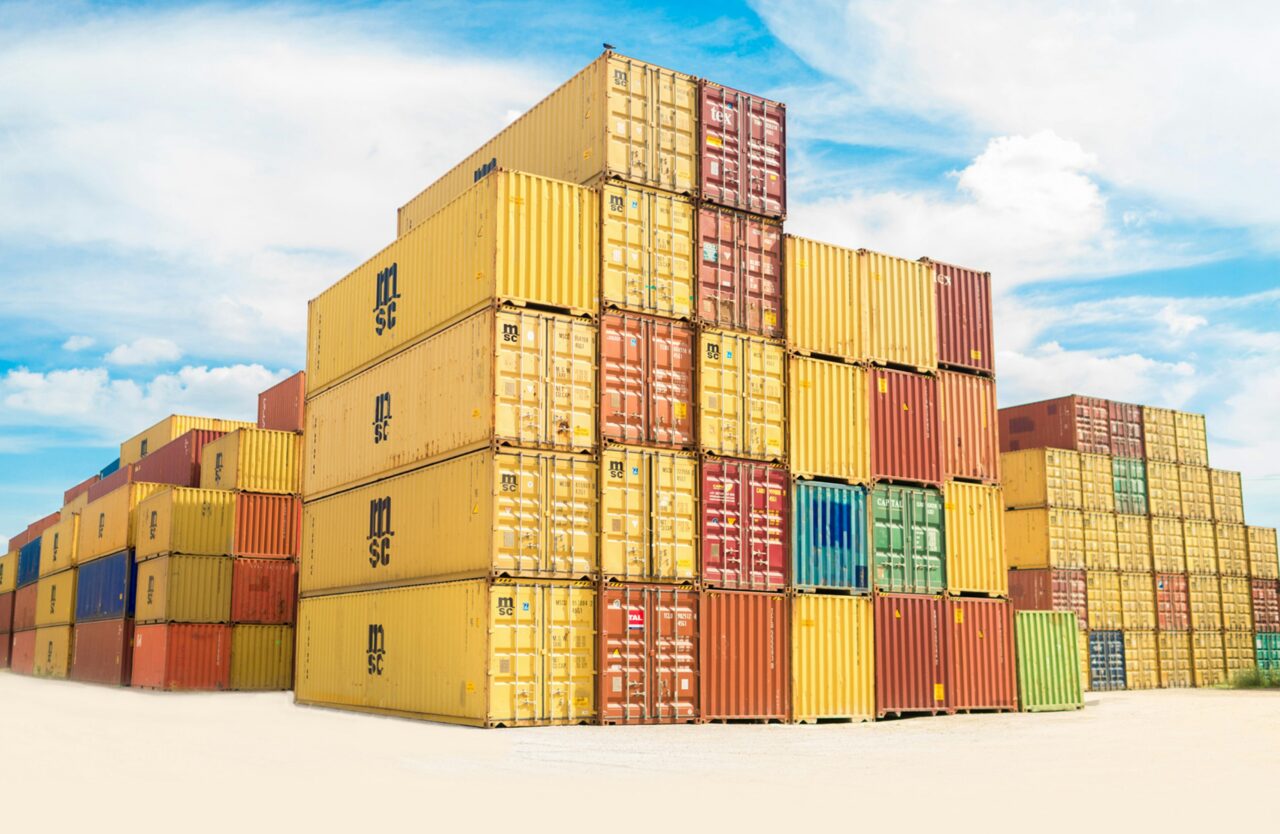
Estonian export growth happens when a good product reaches the right market at the right time – supported by well-thought-out logistics and strong international sales. Photo: Frank Mckenna / unsplash
Export is not a luxury for an Estonian company
An analysis by the Foresight Centre shows how directly exports are linked to company productivity. In Estonia, about 29% of companies export directly, and the closer a company is to exports and global value chains, the higher its average value added per employee.
Data from Statistics Estonia also shows how important the role of medium-sized enterprises is: in 2025, companies with 50-249 employees accounted for only about 5% of companies exporting goods, but they provided 44% of the export turnover of Estonian companies.
Estonia's domestic market is small. If a company wants to reach the next level of growth, international sales are in many cases not just one of the possible strategies. It is the main strategy.
At the same time, we should not delude ourselves: Grow Global will not turn a weak product into a strong one, nor will it solve a company's pricing, production capacity, or competitiveness problems. However, the program can solve a very specific bottleneck – a situation where a growth opportunity exists, but no one has the time or responsibility to systematically realize that opportunity.
In addition, international mentors also support the companies participating in the program for free in refining their export plans.
Now might be just the right moment to open up the next market
Estonia's exports are recovering after difficult years. Demand from Estonia's main trading partners has shown signs of recovery, and at the same time, Estonian exporters have expanded their range of target markets. Estonian companies are finding new markets. The export of services is growing, and in the export of goods, the first half of 2026 has again brought a strong rise.
The winners of the next economic growth cycle may not be only those companies with the best product.
The winners may be those who get to the next market earlier, build relationships there, and consistently put one person in charge of that market.
Grow Global Estonia gives a company the opportunity to find such a person from one of Estonia's hitherto underused talent pools: 55+ professionals with international experience, a wealth of work-life experience, and high motivation.
The company makes the recruitment decision itself. The specialist receives international sales training and a personal mentor. And for five months, you don't deal with a practice company, but with your real export market.
The question is therefore not only which market your company wants to enter next.
The more important question is: who in your company will take responsibility for that market?
Applications for Grow Global Estonia for companies are open until 27 September 2026. Before applying, companies can think through their target market, recruitment needs, and the profile of a suitable export specialist together with the program team: app.visionest.institute/go/grow-global.
The program is free for participants. Co-financed by the European Union.